
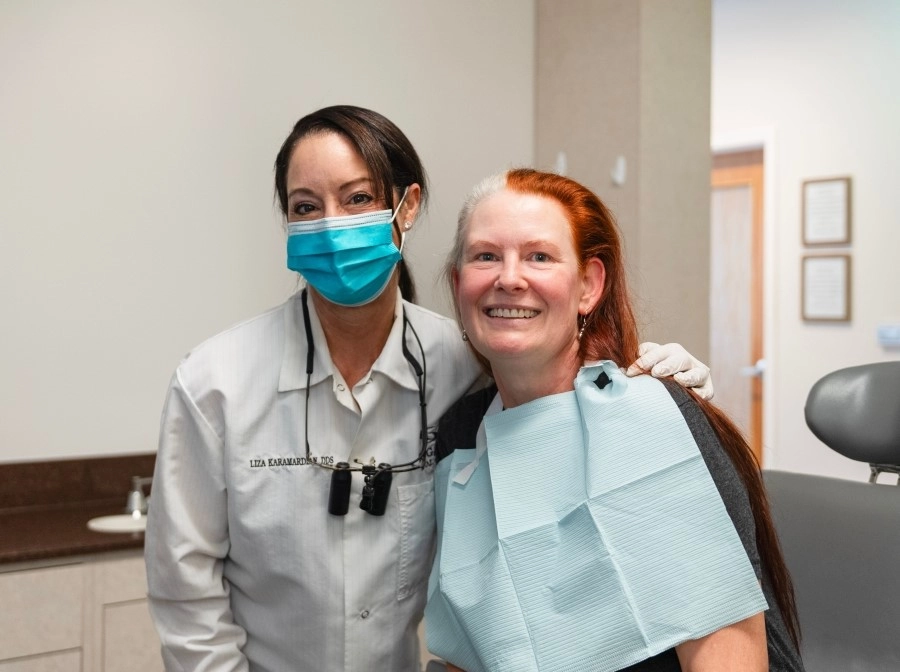
If you’ve been chewing on one side or smiling with your lips closed, a missing tooth has been steering your days. At Los Gatos Dental Group, Matthew Diercks, DDS places and restores dental implants in Los Gatos, CA, all in our own office, so one team plans your new tooth and finishes it.
Most people live with a gap longer than they planned to, and it usually isn’t because they didn’t care. Teeth are lost to an accident, to decay, to a root canal that didn’t hold, and then the next step isn’t obvious. Over time the jawbone where a tooth used to be can lose some of its volume, which is one reason we’d rather you hear your options sooner than later.
Dr. Diercks places your implant and then restores it, so the dentist who plans your surgery is the same one who finishes your tooth. Here is how it usually unfolds:
A 3D cone beam CT (CBCT) scan gives us an accurate model of your jaw, and that model is what we plan placement from.
If your jaw needs more support first, bone can sometimes be added, and the graft needs months to heal before the implant goes in.
The implant post goes into your jawbone and acts as the new root.
Bone grows around the post over time, and that is what anchors it.
A custom crown goes on the post, or a bridge or denture when several teeth are involved.
If the surgery is what has kept you from calling, tell us. We offer oral and IV sedation, and Dr. Diercks can talk through whether either one suits your visit.
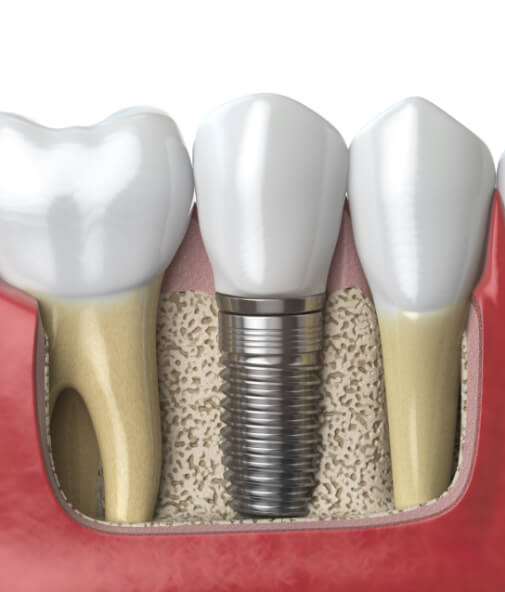
A traditional bridge rests on the teeth beside the gap, while an implant stands on its own in the jawbone. That difference shapes most of what follows.
| Dental Implant | Traditional Bridge | |
|---|---|---|
| How it is held | A post placed in your jawbone | Crowns on the teeth beside the gap |
| Neighboring teeth | Left as they are | Prepared to carry the bridge |
| Jawbone under the gap | The post sits in the bone like a root, which can help protect it | The bridge sits above the gum, and nothing replaces the root |
| Often the better fit when | You have enough healthy bone, or are open to a graft | The teeth beside the gap already need crowns |
A bridge can still be the right call, and our crowns and bridges page covers that route. Cost and the number of visits differ between the two, and we give you a clear estimate for each before you decide. If you are weighing everything from implants to dentures, our missing teeth overview puts the options side by side.
A few implants can anchor a bridge across several missing teeth, and implants can also hold a denture steady. Both begin the same way a single tooth does, with a scan and a look at your bone. Our dentures page explains how implant-retained dentures work.
The price depends mostly on how many teeth you are replacing and what your jaw needs first, such as a bone graft. The restoration on top matters too, because a single crown and a bridge are different pieces of work. You get a clear estimate before treatment begins.
We are a fee-for-service practice, so we are not in network with insurance plans, but we do accept PPOs. Some PPO plans reimburse part of treatment as an out-of-network benefit, and dental insurance often covers only part of an implant, if any. Our financing and insurance page walks through an example. For financing, we work with CareCredit and LendingClub, and patients without insurance can look at our LGDG Savings Plan.
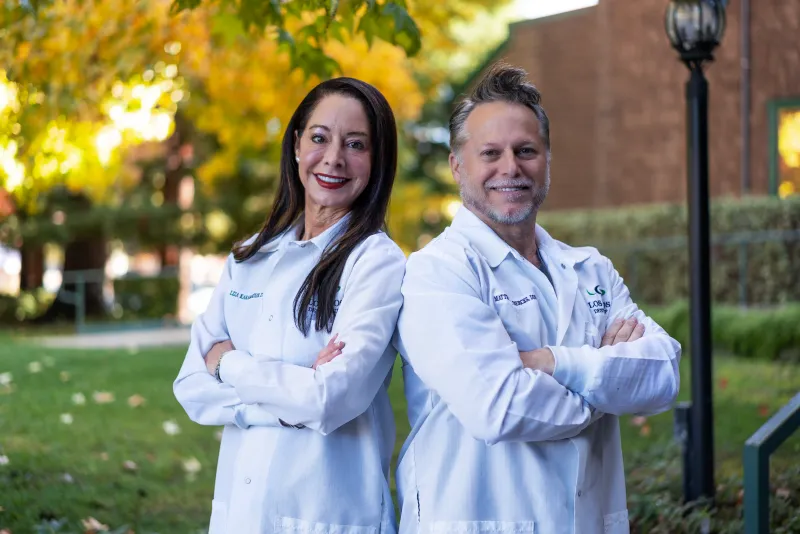
Matthew Diercks, DDS earned his dental degree from the University of the Pacific in 1998 and has been practicing since. He has taken several advanced courses in both placing and restoring implants, which is why one dentist can handle the surgery and the crown on top. He also teaches other dentists as a clinical instructor for Western Surgical and Sedation, so the surgical side of your implant is familiar work for him, and IV sedation is part of his training. You can read more on his bio page.
You have been working around that gap long enough, and you should not have to guess whether an implant would hold. At your consultation, Dr. Diercks examines your mouth and, where it helps, uses our 3D scan to see your jaw. He tells you plainly whether implants fit or another option would serve you better, so you decide with the facts in front of you. Call us on (408) 402-0900 and our front desk will find you a time that works.
Yes. Matthew Diercks, DDS places the implant and restores it with the crown or other restoration that goes on top, all here in our office. That means you stay with one dentist and one team from the first scan to the final tooth, instead of being sent to a surgeon elsewhere partway through.
It depends mostly on how many teeth you are replacing and whether your jaw needs a bone graft first. Because every mouth is different, we give you a clear estimate after your consultation, before any treatment begins. If cost is a worry, ask us about our financing partners and the LGDG Savings Plan when you call.
Often only in part, if at all. We are a fee-for-service practice that accepts PPO plans, and some PPOs reimburse a share of treatment as an out-of-network benefit. Our financing and insurance page walks through how an out-of-network benefit works, so you know what to ask your plan before your visit.
Plan on a few months from placement to your final tooth, because the bone needs time to grow around the implant before the crown goes on. If you need a bone graft first, that adds months of healing before the implant itself is placed. Dr. Diercks maps out your timeline once he has seen your scan.
Possibly. When a jaw cannot support an implant yet, bone can sometimes be added first, and the implant goes in after that heals. Dr. Diercks checks your bone before planning anything, so you learn where you stand before you commit to any treatment.
We use a 3D cone beam CT, or CBCT, scanner. It builds an accurate model of your jaw, including how much bone is there, which helps Dr. Diercks plan where an implant can go. It is the same technology we use for other advanced procedures, and it takes the guesswork out of planning.
Dr. Diercks numbs the area first, and we offer oral and IV sedation for patients who want more than that. Whether sedation suits your implant visit is something to settle with him at your consultation, so you know your options well before the day itself.
Yes. A few implants can anchor a denture so it stays steady. Our dentures page explains how implant-retained dentures work, and your consultation is where Dr. Diercks confirms whether your jaw can support them. If a denture you wear now keeps moving around, that is a good thing to mention at your visit.